

The Problem with Manual Invoice Processing
Before diving into the solution, it's important to understand the problem in detail.
What is Work in Progress (WIP)?
WIP is a financial reporting method construction companies use to align revenue recognition with actual job progress rather than just billing activity. It compares three key figures for every project:
- Costs incurred so far (the expenses recorded)
- Estimated total job cost (the predicted full cost to complete)
- Contract value (the total revenue expected)
Using these, contractors calculate how much of the job is complete and how much revenue to recognize. The goal is to match your financial records with the reality on the ground.
Where Manual Invoicing Breaks Down
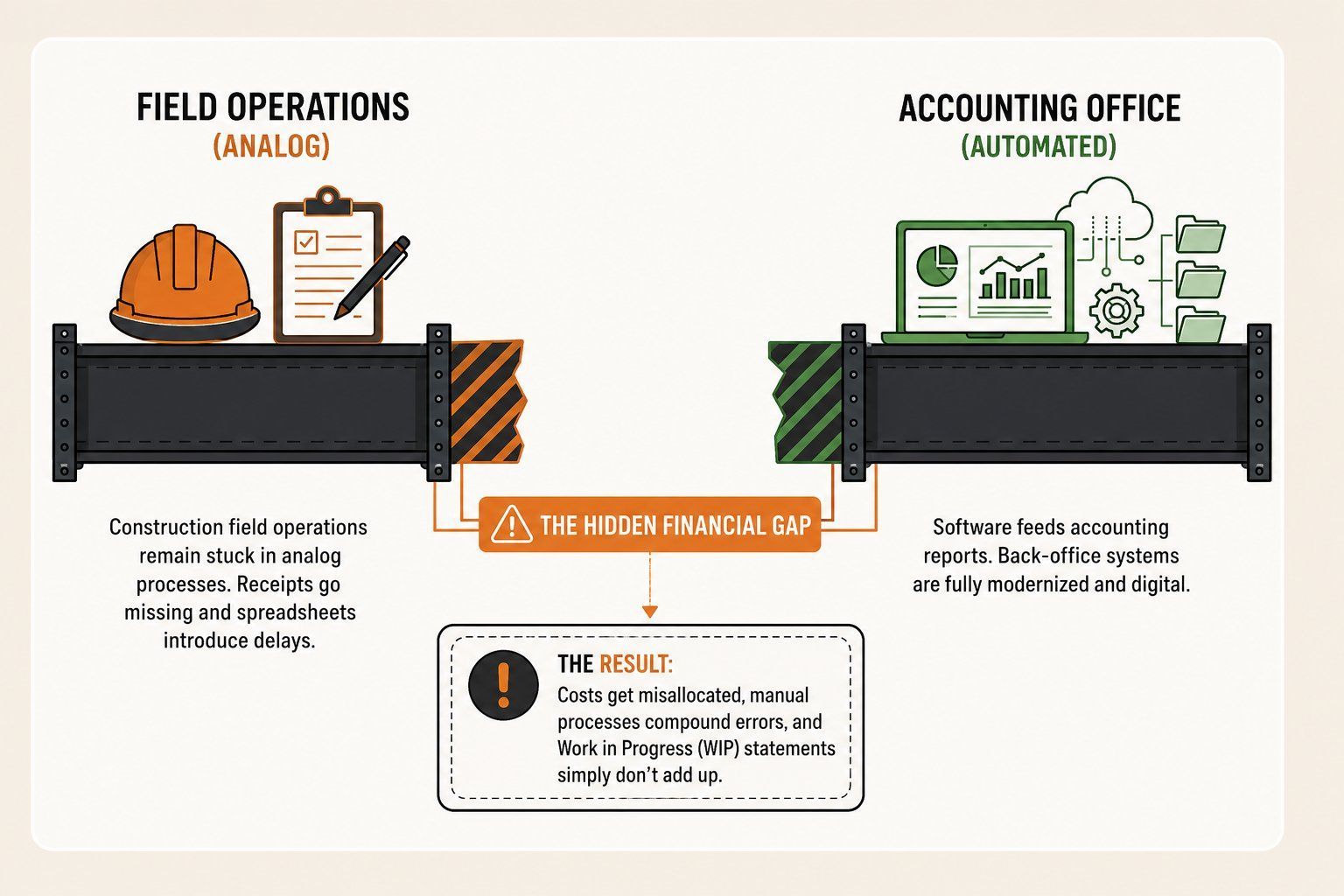
The accuracy of WIP reports depends on timely, accurate data flow from the field to the finance office. Unfortunately, most construction companies still rely heavily on manual processes when it comes to capturing receipts and invoices from the field. This leads to:
-
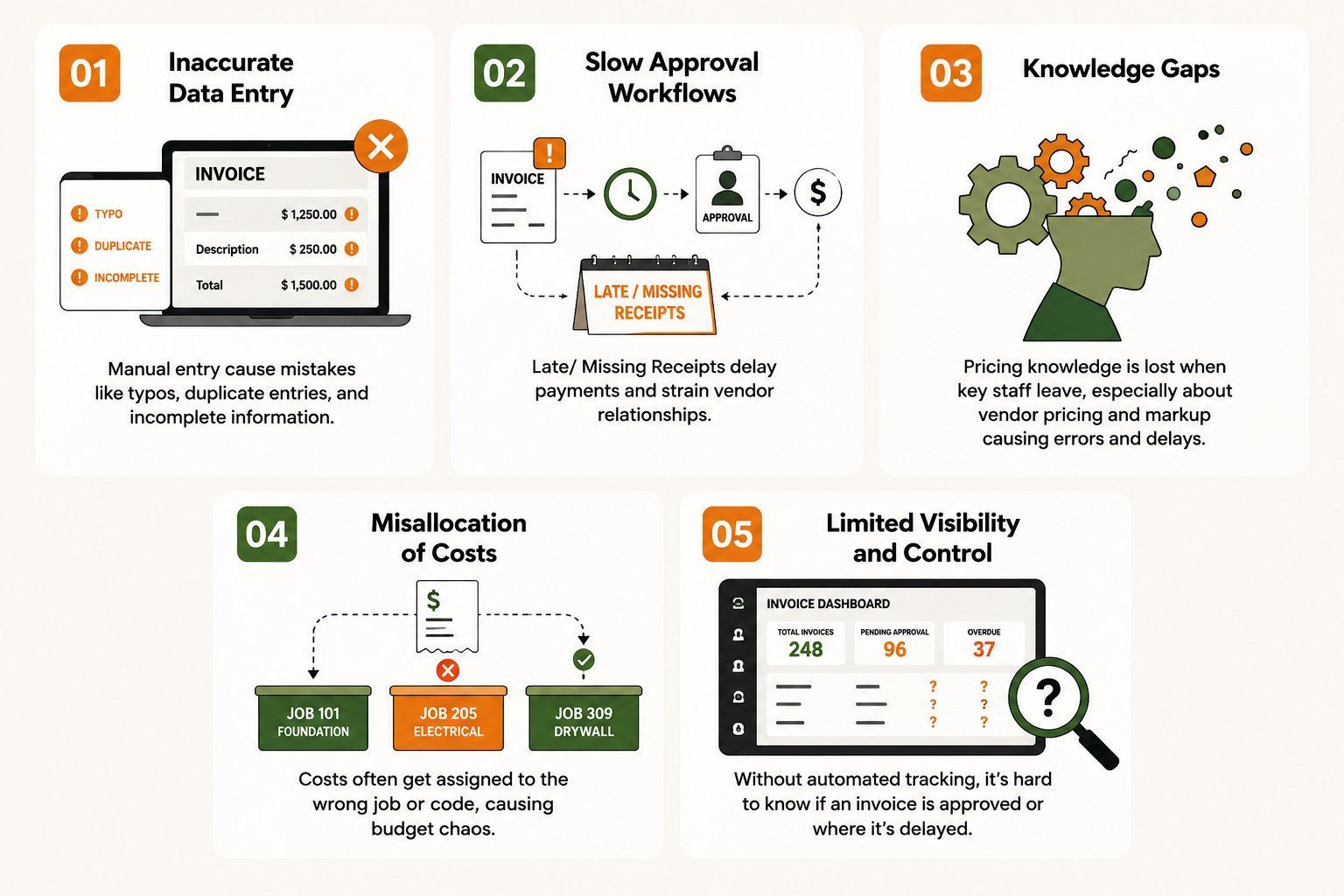
Inaccurate data entry: Entering invoice data by hand takes a lot of time for your team and introduces mistakes like typos, duplicate entries, and incomplete information that cause approval procedures to take longer.
-
Misallocation of Costs: Receipts may be allocated to the incorrect job or cost code in the absence of appropriate job context. Spreadsheets used by field teams to manage expenses frequently don't automatically sync with accounting software, which causes timing errors.
-
Slow approval workflows: Payments are delayed when invoices need to be printed, routed, or physically signed. This makes vendors wait, which leads to late fees and strained vendor relations.
-
Limited visibility and control: It is challenging to ascertain whether an invoice has been correctly approved or where it is being held up in the absence of automated audit trails or real-time tracking.
-
Vendor pricing and markup gaps: Pricing knowledge lives in the person's head, what the vendor charges, what volume to order and what markup to apply to the customer. When that person leaves or a new hire steps in, none of that transfers. The new hire is either guessing on markup, overpaying vendors, or stalling on orders until they track down someone who knows.
These issues mean that by the time a WIP report is generated, the data feeding it is incomplete or inaccurate, leading to misleading financial insights and poor decision-making.
You Can Make Your Own Purpose Built Software (PBS)
The construction industry's challenge is not just about having software — it's about capturing accurate, real-time data at the point of spend in a way that respects how field teams work.
This is where a purpose built software comes in. Designed specifically for construction workflows, PBS uses AI and automated processes to close the gap between spending and recording, providing your finance team with accurate data the same day costs occur.
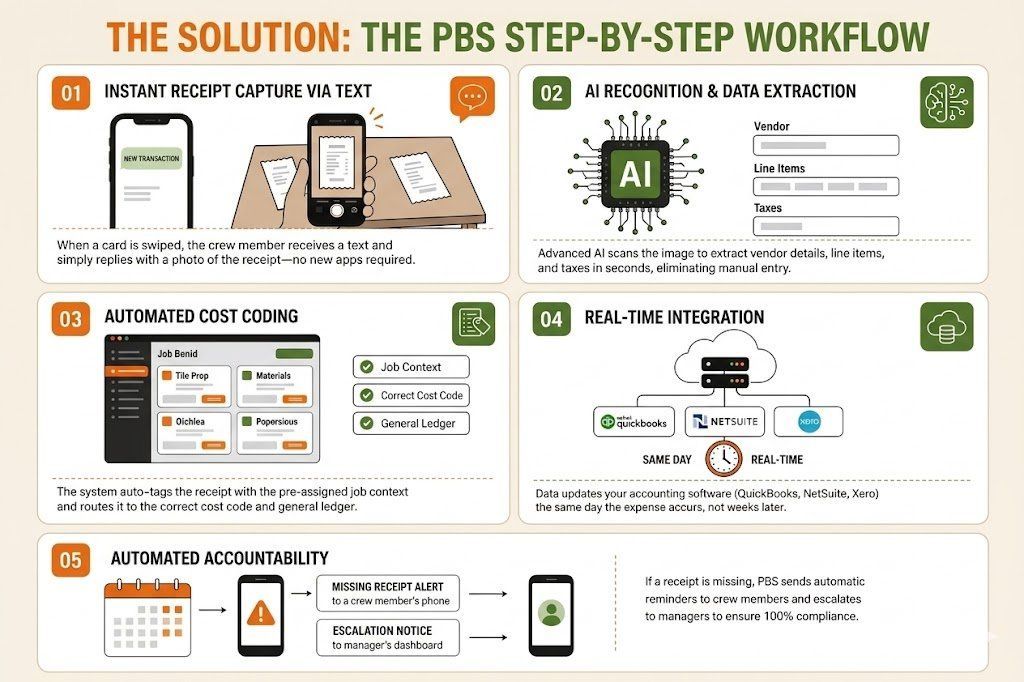
- 1 Instant Receipt Capture via Whatsapp or iMessage When a company card transaction occurs, PBS immediately sends a text to the crew member who made the purchase, requesting a photo of the receipt. No new app or login is needed—just reply to the text with the receipt image.
- 2 Pre-Assigned Job Context The system already knows the job, vendor, date, and amount from the transaction, so it auto-tags the receipt with the correct project and cost code before the spend happens.
- 3 AI Receipt Recognition and Data Extraction Advanced AI scans the receipt image, extracting vendor details, dates, line items, amounts, and taxes accurately in seconds, eliminating manual data entry.
- 4 Automated Cost Coding and Routing The system automatically routes the extracted data to the correct job cost code, general ledger account, and project within your existing accounting software such as QuickBooks, NetSuite, or Xero.
- 5 Real-Time Integration and Syncing Data updates your accounting system the same day the expense occurs, not weeks later during reconciliation. This keeps your WIP and financial reports current and trustworthy.
- 6 Automated Escalations and Accountability If a receipt is not submitted within a set timeframe, PBS sends automatic reminders first to the crew member, then escalates to the project manager, ensuring no missing receipts.
Build a Purpose-Built System to close your data gap with RipeSeed
We build a field data capture system configured to your operation, your cost codes, your subcontractor billing cadence, and your accounting stack, so the numbers your bank and surety see reflect what your crews actually spent. Every GC operation has a different card policy, crew structure, and accounting stack. The system we build reflects yours.
Book a call to build your systemHow It Makes Finance Team Life Easier
-
Eliminates Manual Errors: AI-powered receipt tracking cuts down mistakes like typos, duplicate entries, and missing data, ensuring cleaner and more reliable financial records. The system also flags duplicate or suspicious transactions before they hit the books, lowering financial risk before it becomes a problem.
-
Provides Real-Time Expense Visibility: Finance teams and project managers can see expenses as they occur. That instant access helps manage budgets proactively instead of chasing numbers after the fact.
-
Automates Data Coding and Routing: AI automatically assigns costs to the right categories and routes documents to the right people. This removes tedious data entry from the finance team's plate, saving hours of manual processing and freeing them to focus on analysis instead of paperwork.
-
Speeds Up Approvals and Payments: Managers can approve invoices from any device, anywhere, with all the relevant information in front of them. Automated workflows route approvals quickly, reducing bottlenecks, avoiding late payments, and keeping vendor relationships intact.
-
Ensures Full Audit Trails: Digital records are securely stored and easy to search, making audits and compliance checks straightforward rather than stressful.
-
Improves Collaboration: Vendors, subcontractors, and internal teams can all upload and access receipts in one place, keeping everyone on the same page without back-and-forth communication.
How It Is Good for Business Overall
AI reduces estimating errors by thoroughly analyzing thousands of data points. It learns from past projects to improve future estimates and prevent repeating mistakes. This leads to more accurate estimates, helping to avoid unexpected costs and delays.
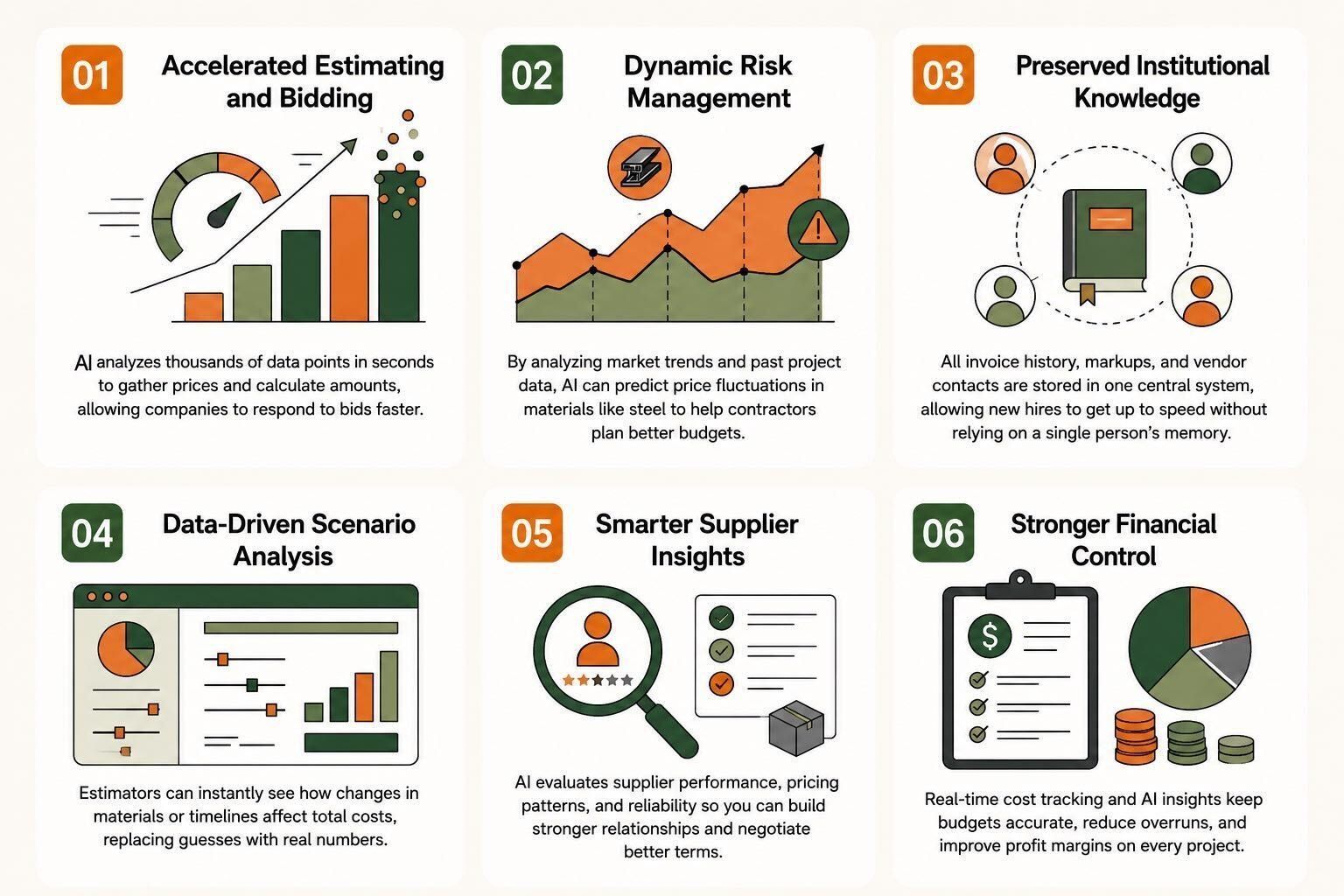
- 1 Saves Time: In the past, estimators had to spend days or weeks manually checking blueprints, calling suppliers for prices, and doing all the math by hand. AI speeds this up by doing many of those tasks automatically and analyzing data in seconds. It quickly gathers prices, calculates amounts, and puts together estimates, helping construction companies respond faster to bids and start projects sooner.
- 2 More Accurate Estimates: AI helps reduce making estimating errors by carefully checking thousands of data points. Even skilled estimators can make mistakes when working with lots of numbers or missing details but AI learns from past projects and improves future estimates to avoid repeating mistakes. This means the estimates are more reliable, helping prevent unexpected costs and delays.
- 3 Helps Manage Risks: Construction projects face many cost risks like rising material prices, labor shortages, or bad weather. AI looks at past data and trends to predict these risks before they happen. For example, if steel prices are going up, AI will suggest adding an extra budget for it. This helps contractors plan better and avoid losing money.
- 4 Uses Real-Time Data: Prices for materials and labor change all the time. AI-powered estimating tools connect to live market data and supplier updates, so your cost information is always current. This means your estimates reflect the latest prices, making your budgets more accurate and trustworthy.
- 5 Supports Scenario Analysis: When clients question the price or suppliers change terms, estimators need quick answers. AI lets them change variables like materials, number of workers, or timelines and instantly see how those changes affect costs. This helps make smarter decisions based on real numbers, not guesses.
- 6 Preserves Institutional Knowledge: When an experienced estimator leaves, they take years of pricing know-how, vendor contacts, and project history with them. AI keeps all this information like invoices, markups, cost patterns, and client records in one place. Everyone on the team can access it, so new employees can get up to speed quickly without relying on just one person.
Conclusion: Take Control of Your Construction Invoices and Financials with AI
With AI-powered receipt tracking and invoice processing, you no longer need to worry about outdated data or delayed reports. Instead, you receive real-time insights that empower you to make informed decisions swiftly and confidently. AI lifts the heavy burden of manual data collection and error-prone processing, offering precise, up-to-date information that enhances your project management and financial control.
By integrating AI into your workflow, you can transform construction reporting from a source of stress into a strategic tool that drives profitability and operational excellence. In the end, embracing AI allows you to regain control, ensuring your projects stay on track, within budget, and your business stays competitive.